



Anchor Alarm: rest easy while you're at anchor
Anchor Alarm keeps a constant watch on your GPS position relative to where you dropped anchor. Drift too far from that spot, and it sounds an alarm and puts a clear warning on screen, so you'll know the moment your boat starts moving somewhere it shouldn't.
Anchor Alarm settings
Open the main Settings page and tap "Anchor Alarm" to get into its dedicated setup page.

Setting the anchor position
Getting the anchor position right matters more than almost anything else here, since the whole alarm is built around calculating drift from that exact point, meaning the spot where your anchor actually rests on the seafloor, not where your boat happens to be sitting.
Every time you activate anchoring mode, you'll be asked to choose how to set that position.

- Start receiving AnchorLink. Available only if you've already enabled AnchorLink Mirroring on another device logged into the same GEC Account. This starts your remote Anchor Alarm mode, see the AnchorLink page for the full picture. It requires an active Advanced Tools subscription.
- Last used position. It starts the alarm using whatever anchor position you set last time (this option won't appear if you've never used the feature before).
- Live anchoring capture. Lets you define a brand new anchor position while you're in the middle of anchoring, walking you through helpful prompts along the way. For the full breakdown of best practices here, see our article on the anchoring process before setting the Anchor Alarm.
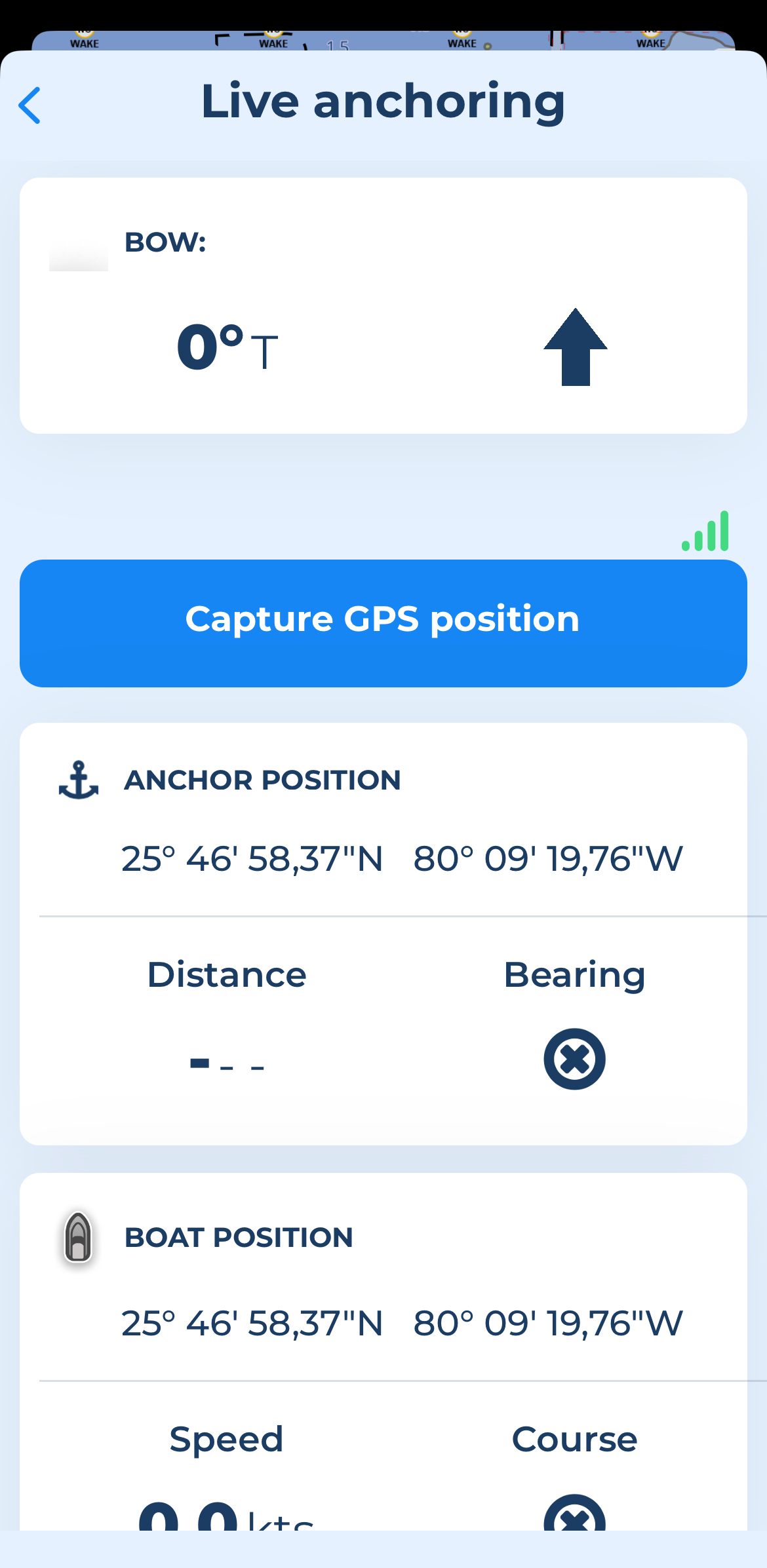
- After drop capture. For when you've already released the anchor and just need to record its position. If you're currently sitting directly above it, choose Option A, capture your GPS position, and you're done. If you're not directly above it, choose Option B instead, capture your GPS position, then enter the distance to the actual anchor position to complete the setup.


You can restart this whole process anytime by tapping "Set with GPS" next to the "Anchor position" label, or enter coordinates manually by tapping directly on them. You can also adjust the anchor position straight from the map once the alarm is active: tap the Anchor Alarm circle to open a pop-up with a draggable pointer.

One more tip worth knowing: connecting your boat's own instruments through a Wi-Fi connection noticeably improves the alarm's accuracy and stability. Using your boat's GPS instead of your phone's one cuts down on false alarms caused by simply moving around the boat, and it also lets you check depth and wind from bed if you're leaving the alarm running overnight. Just remember to switch on airplane mode to save battery.
Setting the alarm parameters
The alarm triggers once your GPS position drifts outside the radius you've set from your anchor position. You can fine-tune a few things here:
- alarm radius, how far you're comfortable drifting before the alarm sounds, in feet or meters depending on your app settings;
- warning area, an earlier heads-up as you approach the alarm radius, with the display shifting from green to yellow so you notice before it's too late;
- alarm delay, how many seconds the app waits after you drift outside the zone before actually sounding the alarm, giving you a chance to drift back in without triggering a false alert.
There's also Anchorage Tracking, which quietly records your boat's movement while anchored so you can review how much it swung overnight. This track is drawn as a thin, light gray line, deliberately understated so it doesn't clutter your screen, different from a standard recorded track. If you'd rather see it in the usual track style, you can switch that on separately.
Beyond distance, you can also enable:
- low battery alarm, a reminder to plug in when your device is running low, worth knowing if you're leaving the alarm running overnight, since charging beforehand is always the safer bet;
- GPS quality alarm, which alerts you if your GPS signal stays weak for more than 5 minutes straight.
AnchorLink settings
AnchorLink lets you monitor your boat's anchor status remotely, sending all the relevant information to a second device you bring with you when you're off board. Head to the dedicated AnchorLink page for the full setup and settings.
Anchor Alarm status on the map
While active, Anchor Alarm shows a colored circle on the map, centered on your anchor position, so you can read your status at a glance.

- Green means your GPS is inside the warning area.
- Yellow means you're between the warning area and the alarm radius.
- Red means you've drifted outside the alarm radius entirely.
- Gray means there isn't enough GPS data available right now.
A yellow line marks exactly where the warning area begins. Once active, a dedicated info window also appears on screen, keeping the key anchorage details visible at a glance.

Want to see it in action?
For a full walkthrough of Anchor Alarm, check out our video tutorial.
