


As boaters, we love exploring open waters, anchoring in quiet coves, and observing marine life up close. But even the smallest actions on the water can create a ripple effect, sometimes positive and sometimes harmful across marine ecosystems.
Coral reefs can bleach when water temperatures rise by just a few degrees, and seagrass meadows can be permanently damaged by careless anchoring. Yet there’s hope, in the past years there have been studies that see encouraging signs of recovery. Fish populations are returning to protected areas, coral slowly regaining colour, and ecosystems are beginning to recover once human pressure is reduced.
For boaters, this contrast is both a caution and a source of optimism. You might think, “Can one boat really make a difference?” The answer is yes, when hundreds of vessels adopt mindful habits, the impact adds up and the ocean benefits.
Responsible boating practices
Responsible boating isn’t complicated. It’s less about radical changes and more about small consistent habits that protect fragile ecosystems while keeping yours and future boaters experience enjoyable.
1) Anchoring with care
Where you drop anchor is one of the most important decisions you make on the water. Sensitive habitats, like coral reefs, seagrass beds, and fragile rocky bottoms, aren’t just beautiful, they’re essential for biodiversity and sediment stability. Anchoring directly on them can cause long-lasting damage.
In the Mediterranean Sea, Posidonia Oceanica is a seagrass found exclusively in these areas, growing at depths between 0 and 40 meters. Often referred to as the “Lung of the Mediterranean”, Posidonia plays a vital role by producing one of the most important sources of oxygen in the Mediterranean Sea. These underwater meadows are also powerful carbon sink. In fact, they store up to ten times more carbon per square meter than terrestrial forests.
The presence of Posidonia in coastal areas contributes to less issues with erosion, it decreases the power of the swell by 20%. This natural barrier plays a crucial role in protecting beaches. It is also responsible for the refuge and breeding of more than 400 plant species and 1000 animal species. Despite their importance, Posidonia is under increasing pressure. One of the most significant threats comes from anchoring. In areas with heavy boating activity it is necessary to apply more responsible anchoring practices.
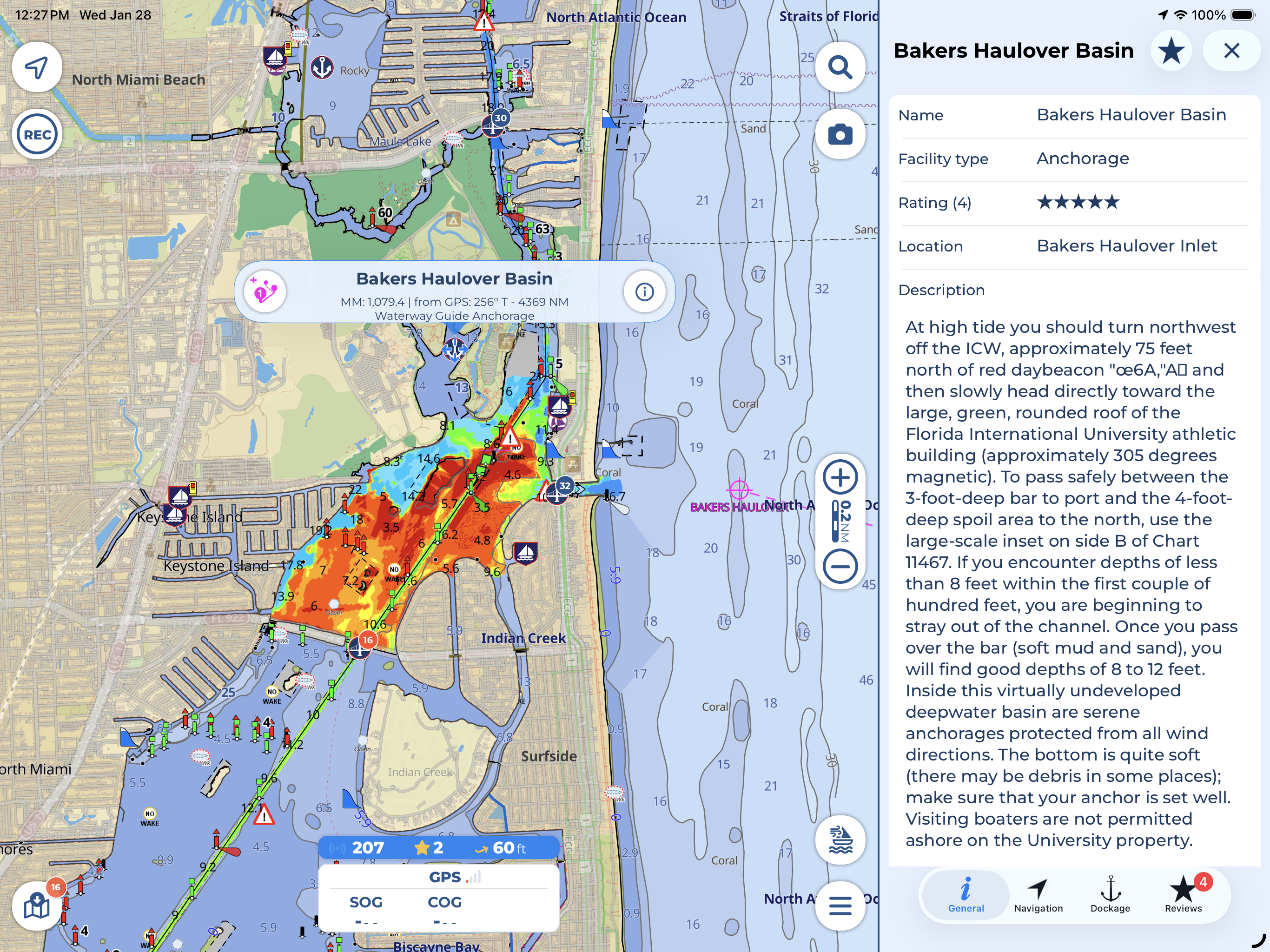
Whenever possible, choose sandy bottoms, designated anchoring zones, or established mooring buoys. Even a small adjustment can prevent significant ecological harm. Tools like Aqua Map help by showing designated anchorages and marinas with Points of Interest from Waterway Guide and Active Captain.
2) Respecting No Wake Zones and Protected Areas
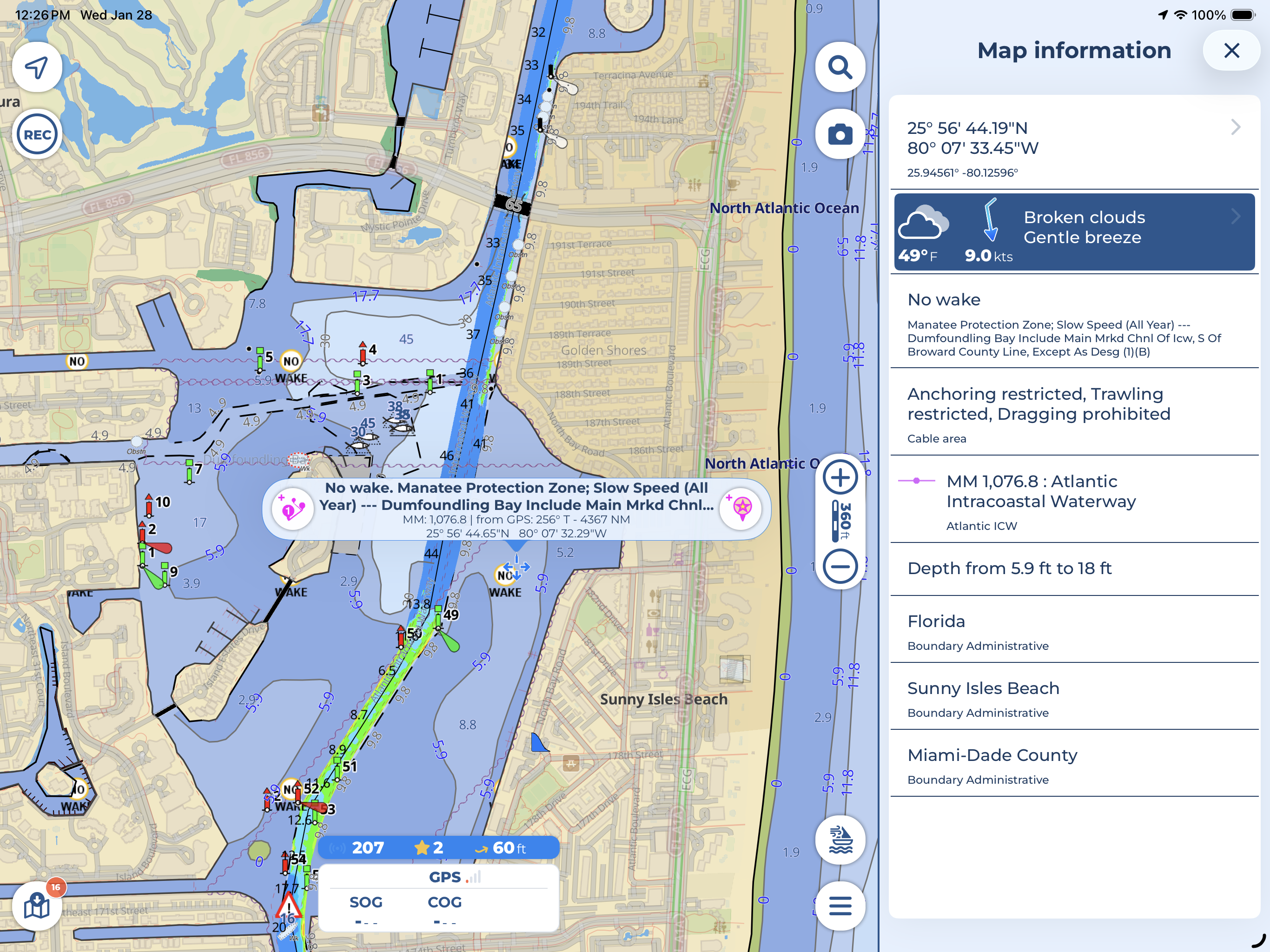
Respecting ‘No Wake Zones’ and protected areas are just as important. These areas exist not only for navigational safety but also to protect shorelines and aquatic habitats. Excessive wake can cause shoreline erosion, stir up sediments, cause habitat degradation, and reduce water quality.
Florida, is home to the Florida Manatees, they are a protected species under federal and state law. These laws make it illegal to harass, harm, or disturb manatees. These areas are regulated and include idle-speed zones, slow-speed zones, no-entry areas, and seasonal protection zones, particularly around warm-water refuges, seagrass beds, rivers, and coastal waterways. Speed restrictions are carefully defined to limit wake and propeller
damage, as manatees often feed or rest just below the surface and can be difficult to spot from a moving vessel.
For boaters, navigating these areas requires heightened awareness and strict adherence to posted signs and charted zones. Boaters should remain vigilant for visual cues such as snouts, backs, or circular surface disturbances known as “manatee footprints,” and avoid approaching or interacting with the animals. Respecting manatee protection zones is both a legal obligation and a practical way to preserve Florida’s waterways, ensuring safer navigation while helping protect a species that plays an important role in the state’s marine ecosystem.
With Aqua Map, boaters can easily identify “No Wake Zones” and protected areas directly on the charts and adjust their speed accordingly.
3) Fuel and Engine management
Proper fuel handling and engine maintenance are essential for protecting water quality. Even small spills or leaks can introduce harmful hydrocarbons into the water. Regular engine checks, careful refueling, and using cleaner, more efficient fuels all help reduce environmental impact.
Small Actions, Lasting Impact
Even small habits matter. The key is consistency. Repeated, thoughtful practices build up to a healthier, more vibrant ocean. Each action may seem minor on its own, but together they support resilient marine ecosystems. Responsible boating doesn’t limit your experience, it enhances it, fostering deeper and more meaningful connections with your environment. By navigating with care, we help ensure that oceans, coasts and waterways remain vibrant and full of life for future generations of boaters.
